
Item 1
Item 2
Item 3
Item 4
Item 5
Item 1
Item 1

Tent Sizing
Choosing the right tent is one of the most important decisions when planning an event. From cozy gatherings to large-scale celebrations, the size and style of your tent help set the tone and ensure everything runs smoothly.
This guide breaks down the most important considerations—from guest count to layout needs—to help you confidently select the best tent for your event. With the right setup, you’ll create a space that feels seamless, comfortable, and memorable.
.png)
Pole Tents vs Frame Tents
Pole Tents
Pole tents are supported by interior center poles and perimeter poles, with the fabric tensioned and anchored into the ground using stakes. They are designed for installation on grass or soft surfaces only.
Because pole tents rely on staking and tension, they require approximately 5-7 feet of clear space on all sides of the tent footprint to allow for proper anchoring and safe installation. Interior poles are part of the structure and should be considered when planning table layouts, aisles, and dance floors.
Best For:
Outdoor events on grass
Large open lawn areas
Events with plenty of surrounding space
Things to Know:
Requires staking into grass
Needs 5-7ft of clearance on each side
Interior center poles are present
Not suitable for concrete or asphalt

Frame Tents
Frame tents use a rigid aluminum or steel frame, allowing for a completely open interior with no center poles. They can be installed on grass, concrete, asphalt, patios, or driveways, using stakes or weighted anchors.
Frame tents are more space-efficient and typically require less clear space on each side of the tent footprint for setup and anchoring. Their flexible installation makes them ideal for tighter spaces and mixed surface areas.
Pole Tents
Pole tents are supported by interior center poles and perimeter poles, with the fabric tensioned and anchored into the ground using stakes. They are designed for installation on grass or soft surfaces only.
Because pole tents rely on staking and tension, they require approximately 10 feet of clear space on all sides of the tent footprint to allow for proper anchoring and safe installation. Interior poles are part of the structure and should be considered when planning table layouts, aisles, and dance floors.
Best For:
Backyards, patios, and paved areas
Events with limited surrounding space
Open layouts without interior obstructions
Things to Know:
Works on most surface types
No interior poles to plan around
Clean, modern appearance
Tent Seating Maps
10X10


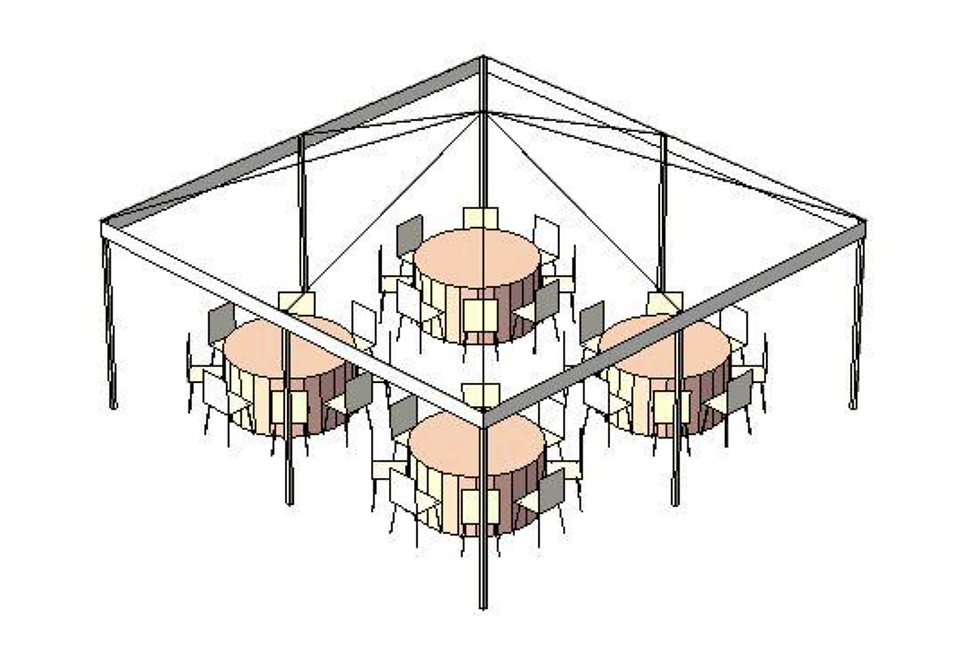


Table seating assumptions
4ft Round= 6 Chairs
5ft Round = 8 chairs
6ft Round = 10 chairs
6ft Rectangle = 6 chairs
8ft Rectangle = 8 chairs

Table Seating Chart
The right seating layout can completely transform an event. From how guests mingle to how comfortable they feel, table choices matter more than you might think. No matter the occasion, selecting the right setup helps create an atmosphere that feels natural and well-organized.
We’ve put together a simple guide to table types, sizes, and seating capacities to make planning easy and stress-free.
Build Your Wishlist
Don't spend days waiting on a price for your next event. Use our Cart tool to build your own wishlist with transparent pricing.

0